Innovation
Internal Comms Matter: The Case for Employee Dashboards
June 5, 2026
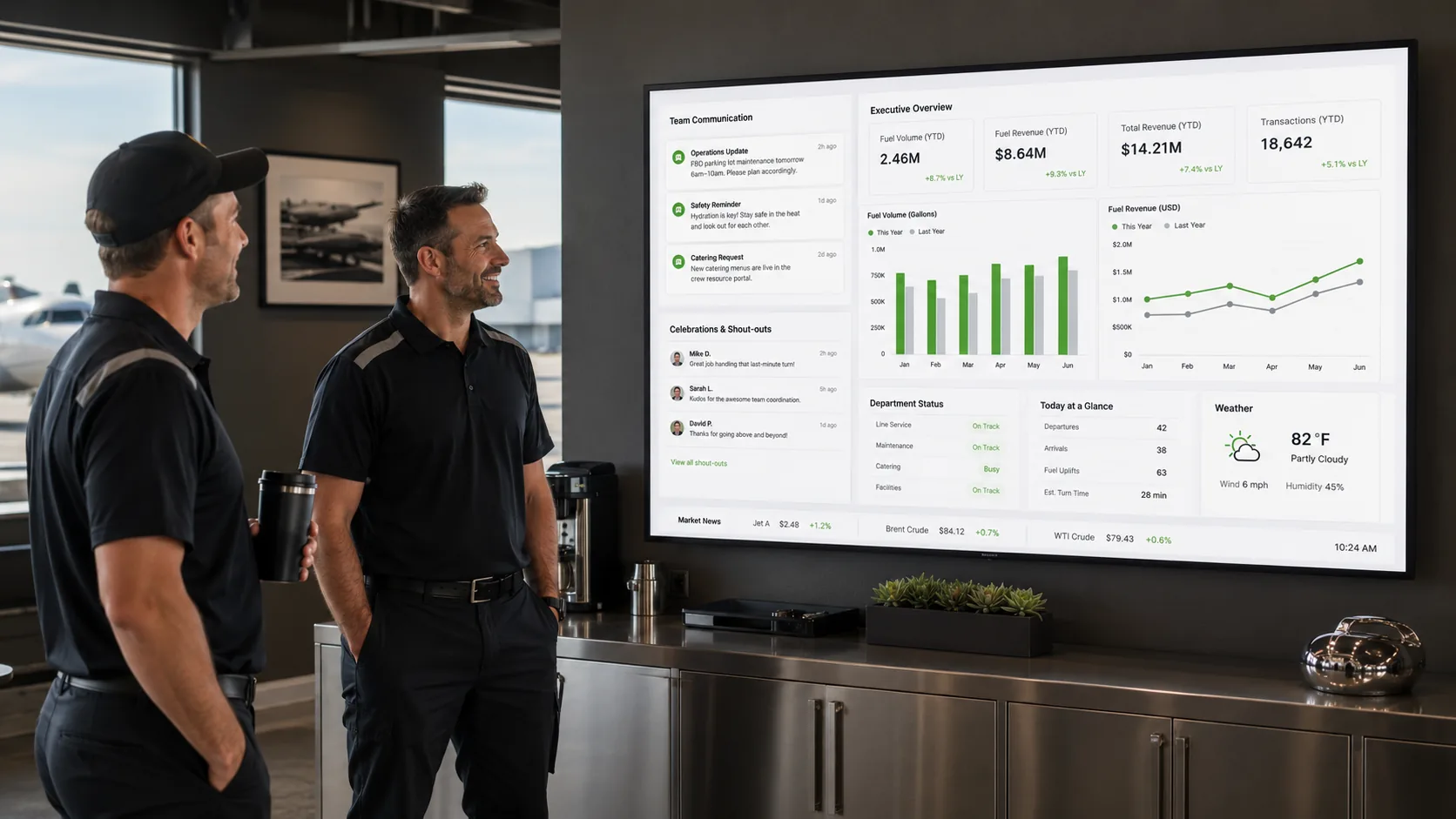
Ask any FBO general manager where messages go to die and they'll point to the break room: a corkboard layered with curling printouts, a binder nobody opens, a group text that half the line crew muted weeks ago. Critical information — a new marshaling SOP, a fuel-safety reminder, a schedule change — competes with expired flyers and loses.
Communication is culture
The way a team shares information says a lot about how it operates. When SOPs are current and visible, when management's message reaches the floor, when a line tech's birthday gets a shoutout on screen — the whole operation feels tighter and more cared-for. That's not soft stuff. It shows up in safety, in retention, and in how the team treats customers.
What lives on an Employee Dashboard
A Sky Sync Employee Dashboard turns the break-room screen into a single source of truth for the team:
- SOP reminders and training videos — the new marshaling procedure, playing on a loop where it'll actually be seen.
- GM and HQ messages — recognition after a hard storm-recovery week, or a heads-up about an inspection.
- Safety alerts and schedule changes — surfaced immediately, not buried in a thread.
- Birthdays and milestones — the small things that make a crew feel like a crew.
No ads. All internal.
The dashboard is private by design — no advertising, all internal use, fully managed and updated by your team. And because it runs on the same synced platform as your customer screens, you push updates from anywhere: the office, HQ, or a manager's iPad.
The customer-facing screens get the attention. But the break-room screen might be the one that changes how your team actually runs.